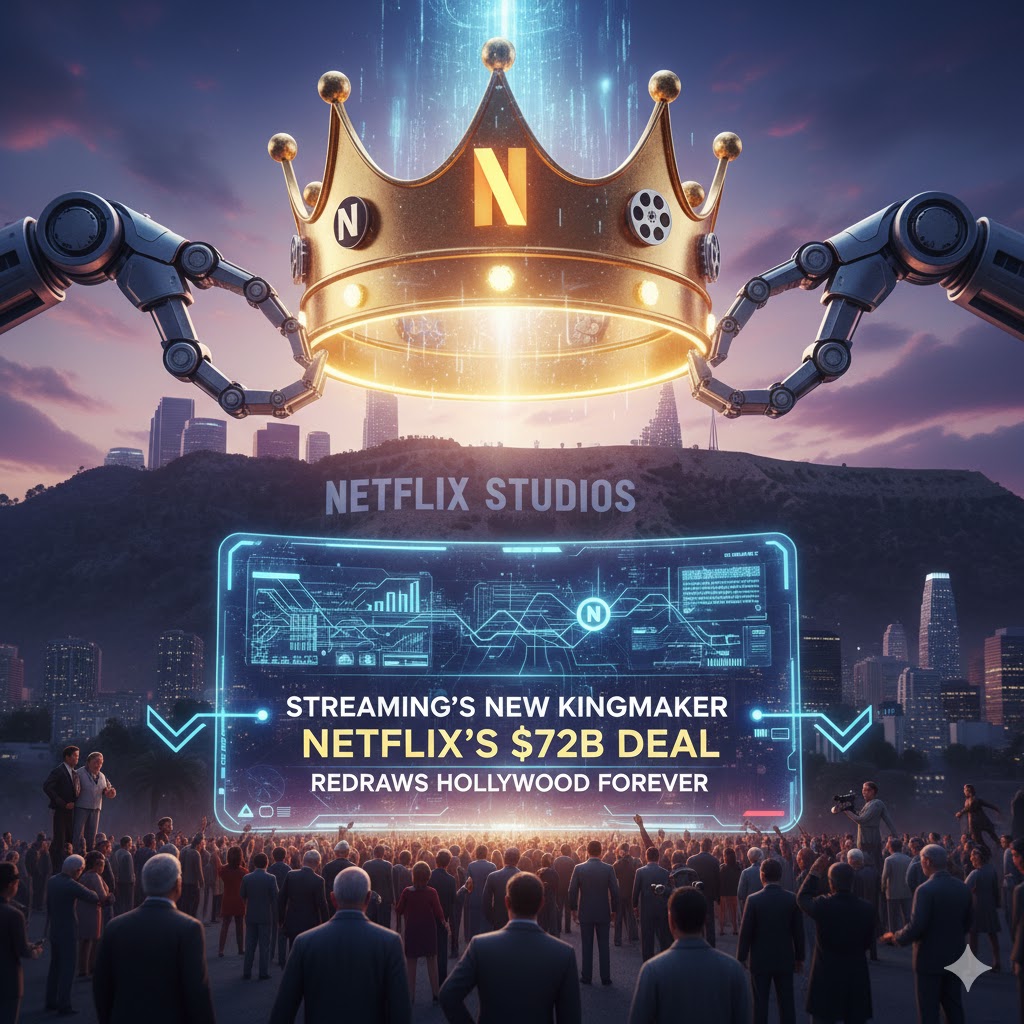
Netflix is making waves in the entertainment industry with a massive 72 billion dollar acquisition that could transform Hollywood. This deal is one of the largest in the history of streaming and shows Netflix’s ambition to move beyond being just a platform for shows and movies. It is about control, scale, and global influence in entertainment.
This acquisition could reshape how content is created, distributed, and consumed around the world. Netflix is set to gain access to decades of classic films, popular television shows, and some of Hollywood’s biggest franchises. The move signals a new phase in Netflix’s strategy that could affect competitors, creators, and audiences alike.
Understanding the details of this deal is essential for anyone following streaming, Hollywood, or global entertainment trends. Readers will learn what Netflix is buying, why it is making this investment, the risks involved, and how it may impact the industry in the coming years.
What Netflix Is Acquiring in the 72 Billion Dollar Deal
Netflix is set to acquire Warner Bros film and television studios along with its streaming division including HBO Max. This also includes a large library of movies, television shows, and franchises that have defined global entertainment for decades.
The acquisition gives Netflix the chance to offer a much broader selection of content to its subscribers. It includes both classic and contemporary titles that can attract new audiences while keeping existing viewers engaged.
The deal does not include cable networks such as CNN and TNT which will be spun off into a separate company. The structure allows Netflix to focus on studio production and streaming while leaving traditional cable behind.
Shareholders of Warner Bros Discovery are expected to receive a mix of cash and Netflix stock for their shares. This is part of a complex financial structure to complete the transaction successfully.
Why Netflix Is Making This Major Hollywood Investment
Netflix has never pursued a deal of this magnitude before. The move signals a strategic shift from relying mainly on original productions to controlling an extensive library of premium content.
One key reason for this acquisition is control over content. Owning studios and intellectual property allows Netflix to avoid licensing uncertainty and ensures that popular titles remain available on its platform.
The acquisition also strengthens Netflix’s competitive position in a crowded streaming market. With rivals expanding and merging, this deal could give Netflix a distinct advantage over other services around the world.
Industry analysts note that Netflix may also be positioning itself for future technological advancements such as AI content creation. A large library of high quality video could serve as the foundation for personalized or generative entertainment in the years ahead.
The Financial Implications of Netflix’s Hollywood Bet
The total enterprise value of the acquisition, including debt, is around 82.7 billion dollars. Netflix is taking on a substantial financial commitment to secure these assets.
This deal carries significant risk because it combines Netflix’s existing obligations with the debt from Warner Bros Discovery. Analysts warn that if projected returns are not achieved quickly, the financial burden could challenge Netflix’s growth plans.
The valuation of Warner Bros represents a premium compared to its projected earnings. The success of this investment will depend on how effectively Netflix integrates the new assets and manages production costs.
Regulatory approval is still required in major markets including the United States and Europe. The final steps are expected to conclude by the third quarter of 2026 once Warner’s cable networks are separated.
Industry and Regulatory Challenges for Netflix
Such a large consolidation of content power is likely to attract regulatory attention. Antitrust authorities may examine the deal for potential effects on competition and consumer choice.
Creative industry groups have raised concerns that fewer independent studios could limit opportunities for diverse projects. There is also a concern that theatrical releases could decline as streaming dominance grows.
Operational challenges are another consideration. Integrating a traditional Hollywood studio with a digital streaming platform requires aligning creative processes, production schedules, and release strategies.
What Netflix’s Acquisition Means for Viewers and Creators
For viewers, Netflix may soon offer one of the largest and most varied entertainment libraries in history. Access to classic films, hit television series, and major franchises could all be available under one platform.
For creators the deal is both an opportunity and a challenge. Netflix’s investment could fund high quality productions, but reduced competition may limit the variety of projects that get produced.
For the entertainment industry, this move signals a new era where streaming companies with vast content libraries can dominate global media. Competitors may need to rethink strategies and pursue mergers to keep up.
Why Content Ownership Is Key for Netflix
Owning large amounts of content is increasingly valuable in the era of artificial intelligence. Video libraries can be used to train new technologies and create personalized experiences for subscribers.
Netflix’s 72 billion dollar investment is not only about acquiring movies and shows. It is also about securing a competitive edge for the future of digital entertainment and maintaining leadership in the streaming market. Source: furtune.com
Final Verdict
Netflix’s 72 billion dollar acquisition of Warner Bros marks a historic turning point for entertainment. The company is moving from being a streaming platform to a major Hollywood powerhouse.
This deal gives Netflix control over some of the most influential content in the world while creating both opportunities and challenges. Heavy debt, regulatory hurdles, and industry resistance are risks that must be managed carefully.
If successful Netflix will not only expand its global reach but also redefine the rules of content creation and distribution for the next decades. The streaming world may never be the same again.
Also Read: Lionel Messi’s Brilliant Assists Lead Inter Miami to Historic First MLS Cup Triumph