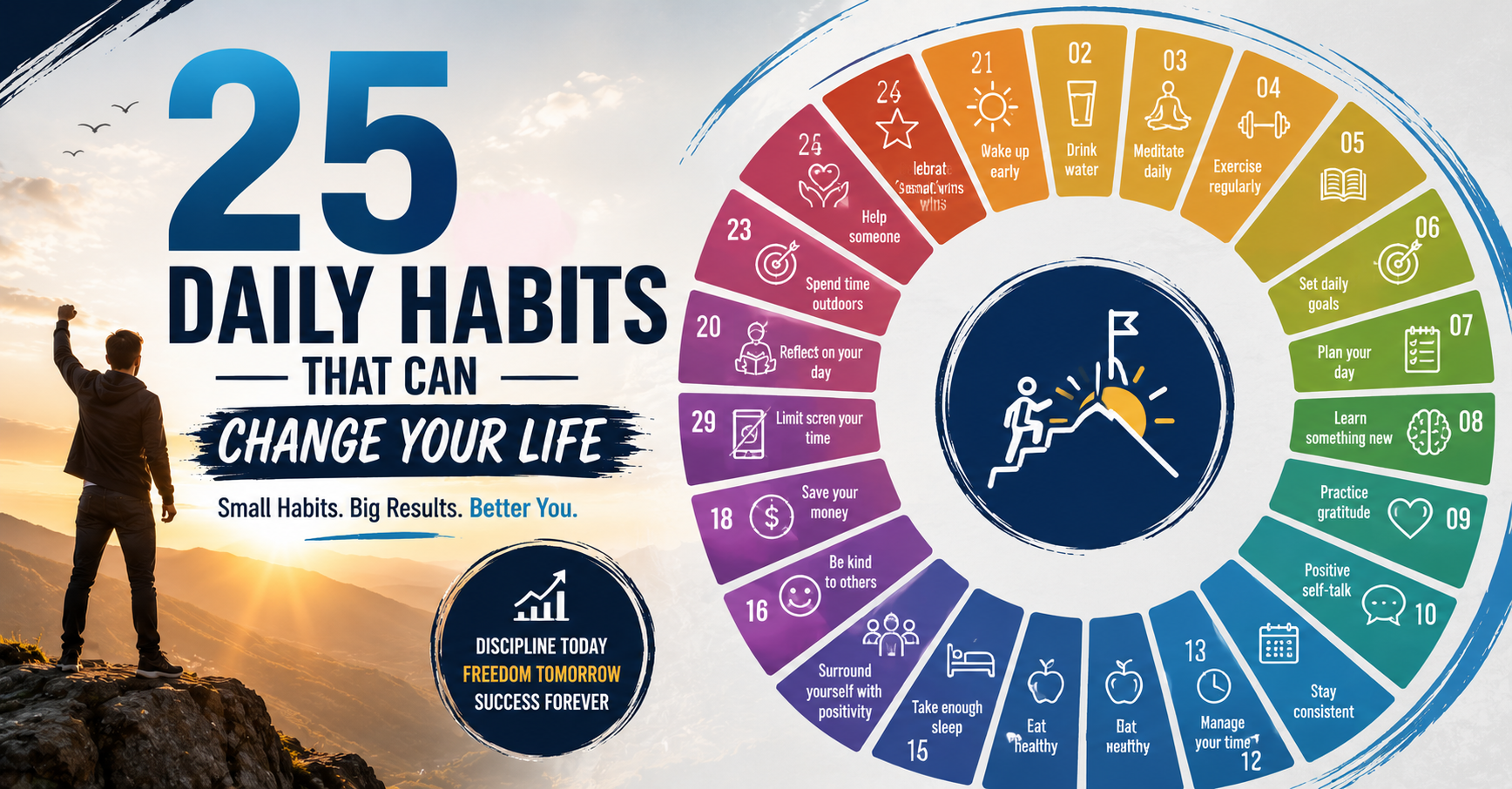
You wake up with good intentions. Tell yourself that today will be different. You plan to eat healthy, finish important work, spend time with your family, and finally take care of yourself. But by the end of the day, you feel tired, distracted, and disappointed.
The work is still waiting. Your health goals are pushed to tomorrow again. The house feels messy. Your mind feels even messier. This is not because you are lazy or incapable. It usually happens because your daily routine is working against you instead of working for you.
Many people think they need a big opportunity, a better job, or a fresh start to change their lives. In reality, lasting success rarely begins with one dramatic moment. It begins with ordinary actions repeated every single day.
The small choices you make after waking up, during work, while eating, and before going to bed slowly shape your future. Good habits create a strong foundation that supports better health, stronger relationships, improved productivity, and greater confidence.
How Daily Habits Shape Your Future More Than Motivation
Most people wait until they feel motivated before taking action. The problem is that motivation comes and goes. Some mornings you feel excited to work on your goals. Other days you simply want to stay in bed and postpone everything.
Habits solve this problem because they reduce the need to make the same decision every day. Once a positive routine becomes part of your life, you spend less energy convincing yourself to do it. This is why successful people often rely on routines instead of emotions.
Whether the goal is personal development, better mental health, financial stability, or physical fitness, daily consistency usually produces better long term results than occasional bursts of motivation.
1. Wake Up With A Clear Purpose
The first few minutes after waking up often decide how the rest of the day will feel. Many people immediately check social media, emails, or news updates before even getting out of bed. This habit fills the mind with information before it has a chance to focus on personal priorities.
A better approach is to spend the first ten minutes quietly thinking about what truly matters today. Stretch your body, drink a glass of water, and decide on one meaningful goal before touching your phone.
This simple morning routine creates mental clarity, reduces unnecessary stress, and helps you begin the day with intention instead of reacting to whatever appears on a screen. Over time this habit strengthens focus and gives you greater control over your daily decisions.
2. Drink Enough Water Throughout The Day
Many people experience low energy, headaches, poor concentration, and even mood changes without realizing that dehydration is one of the causes. Drinking enough water is one of the simplest habits for improving both physical health and mental performance.
Instead of waiting until you feel thirsty, keep water nearby and drink small amounts regularly throughout the day. If you work in an office, study for long hours, or spend time outdoors, hydration becomes even more important.
Water supports digestion, improves skin health, helps regulate body temperature, and keeps your brain functioning efficiently. Replacing sugary drinks with water also reduces unnecessary calories while improving long term health without requiring complicated diet plans.
3. Move Your Body Every Single Day
Many people believe exercise only counts if they spend an hour in the gym. That idea often prevents them from doing anything at all. The truth is that daily movement matters far more than occasional intense workouts.
A twenty minute walk, light stretching, climbing stairs, dancing, cycling, or simple home exercises all contribute to better physical fitness. Regular movement improves heart health, strengthens muscles, supports healthy weight management, and releases natural chemicals that improve mood.
People who include physical activity in their everyday routine often report better sleep, lower stress levels, and increased confidence. The goal is not perfection. The goal is to keep your body active every single day.
4. Eat Food That Gives You Energy
Food is more than something that fills your stomach. It provides the fuel your body and brain need to perform well. Highly processed meals filled with excess sugar often create short bursts of energy followed by tiredness and cravings.
Choosing balanced meals with vegetables, fruits, whole grains, healthy fats, and lean protein helps maintain stable energy throughout the day. You do not need a complicated meal plan to eat better.
Simple home cooked meals often provide everything your body needs. Paying attention while eating instead of scrolling through your phone also improves digestion and helps prevent overeating. Small improvements in nutrition create noticeable benefits over time.
5. Make Your Bed Before Starting Your Day
Making your bed may seem too simple to matter, but it creates an important psychological effect. Completing one small task early in the morning gives your brain an immediate feeling of progress.
That sense of accomplishment often encourages you to complete other important tasks throughout the day. It also creates a cleaner environment that feels calmer when you return home after work or school.
A tidy bedroom reduces visual clutter and makes it easier to relax at night. This habit takes only a few minutes, yet it quietly builds discipline and reinforces the mindset that every small action contributes to a more organized life.
6. Read Something That Helps You Grow
Reading is one of the most affordable ways to improve your knowledge and thinking skills. Whether you choose books about business, psychology, health, communication, or personal development, every page introduces new ideas that can influence your decisions.
Even reading for fifteen minutes each day adds up to several books over the course of a year. That amount of learning can completely change how you approach work, relationships, and personal challenges.
People who read consistently often develop stronger communication skills, broader perspectives, and greater confidence because they are constantly exposing themselves to valuable information instead of endless online distractions.
7. Write Down Your Thoughts Every Day
Your mind processes thousands of thoughts every day. Some are helpful while others create unnecessary stress and confusion. Writing in a journal gives those thoughts a place to go instead of allowing them to remain trapped in your head.
You can write about your goals, your challenges, the lessons you learned today, or simply describe how you feel. There is no perfect format. The value comes from becoming more aware of your own thinking.
Many people discover repeated patterns in their behavior after journaling for several weeks. That awareness makes it much easier to change habits, solve problems, and make better decisions in everyday life.
8. Plan The Three Most Important Tasks
Long to do lists often create the illusion of productivity while making people feel overwhelmed. Instead of trying to complete twenty different tasks, identify the three most important responsibilities that will move your life or work forward.
Complete those tasks before spending time on less important activities. This approach improves focus and helps prevent distractions from taking control of your schedule.
Unexpected events may still happen, but finishing your highest priority work early ensures that your day remains productive even when everything else does not go according to plan. Successful people often achieve more because they focus on what matters instead of trying to do everything.
9. Reduce Unnecessary Screen Time
Mobile phones have become a part of daily life, but they also steal more time than most people realize. You may open your phone to reply to one message and suddenly spend forty minutes watching short videos or scrolling through social media.
At the end of that time, you often feel mentally tired without achieving anything meaningful. Reducing unnecessary screen time gives you back valuable hours that can be used for learning, exercising, spending time with family, or simply relaxing.
You do not need to stop using technology completely. Instead, decide when and why you are using it. This habit improves focus, reduces mental overload, and helps you stay present in real life instead of constantly living through a screen.
10. Practice Gratitude Every Day
Life often feels stressful because the mind naturally focuses on problems, unfinished work, and future worries. Practicing gratitude changes that pattern by helping you notice the good things that already exist around you.
At the end of each day, write down three things you genuinely appreciate. They do not have to be big achievements. It could be a meaningful conversation, good health, a peaceful morning, or support from someone you care about.
Over time this habit trains your brain to recognize positive experiences more easily. It does not remove life’s challenges, but it helps you face them with a healthier and more balanced mindset.
11. Learn One New Thing Every Day
The world changes quickly, and people who continue learning are usually better prepared for new opportunities. You do not need to spend hours studying every day.
Learning one useful idea, one new word, one practical skill, or one industry update is enough to create steady growth over time. You can read a chapter from a book, watch an educational lesson, or practice a professional skill that supports your career.
Small daily improvements become powerful after several months because knowledge compounds just like money. Continuous learning also keeps your mind active, improves confidence, and helps you adapt to changing situations throughout life.
12. Become A Better Listener
Most people listen only long enough to prepare their own response. Very few people truly pay attention to understand what someone else is saying. Becoming a better listener strengthens personal relationships, improves teamwork, and reduces unnecessary misunderstandings.
During conversations, maintain eye contact, avoid interrupting, and focus completely on the speaker instead of thinking about your next answer. This habit makes people feel respected and valued.
Whether you are talking with family members, friends, customers, or colleagues, careful listening often solves problems faster than giving quick advice. Strong communication begins with understanding before speaking.
13. Spend Time Outside Every Day
Modern life keeps many people indoors for most of the day. Offices, classrooms, shopping centers, and homes all reduce the amount of time spent in natural surroundings. Even a short walk outside can refresh your mind and improve your mood.
Fresh air, sunlight, and green spaces help reduce mental fatigue while supporting better physical health. Many people notice that they think more clearly after spending time outdoors, especially during stressful periods.
If your schedule is busy, try walking during your lunch break or sitting outside for a few minutes in the evening. Small moments in nature can create a noticeable difference in your overall wellbeing.
14. Save A Small Amount Of Money Regularly
Many people believe saving money only becomes important when they earn a higher income. In reality, financial discipline begins long before your salary increases.
Saving even a small amount on a regular basis teaches self control and prepares you for unexpected expenses. Instead of spending everything you earn, develop the habit of paying yourself first.
Over time these small savings grow into an emergency fund that reduces financial stress and gives you greater freedom to make better decisions.
This habit is less about the amount of money and more about building a mindset of responsibility and long term planning.
15. Keep Your Home And Workspace Organized
A messy environment often creates unnecessary stress because your attention is constantly pulled toward unfinished tasks and scattered belongings.
Taking just a few minutes each day to organize your room, desk, or work area makes it easier to concentrate on what truly matters. You spend less time searching for lost items and more time completing meaningful work.
An organized space also creates a sense of calm that improves mental clarity. This habit does not require perfection. Simply returning things to their proper place each day helps maintain a cleaner and more productive environment.
How To Build Daily Habits That Actually Last
Many people become excited after reading about self improvement and try to change every part of their life at once. Unfortunately, that approach rarely works for long. Real change happens when you start small and stay consistent.
Choose one habit that feels realistic instead of trying to master all twenty five habits in a single week. Practice it every day until it becomes automatic, then slowly add another habit. This gradual approach reduces pressure and makes success much more likely.
Remember that building better habits is not about perfection. It is about making steady progress that continues even when life becomes busy or challenging.
Another effective strategy is to connect a new habit with something you already do every day. For example, drink a glass of water after brushing your teeth, read a few pages before sleeping, or spend five minutes planning your day immediately after breakfast.
These small connections make new habits easier to remember because they become part of an existing routine. You can also track your progress in a notebook or calendar.
Seeing your consistency grow creates motivation to continue. Missing one day is not a failure. The real mistake is allowing one missed day to become a reason for giving up completely.
Final Thoughts
Changing your life does not require extraordinary talent, unlimited money, or perfect circumstances. It begins with the ordinary choices you make every single day.
Each healthy meal, every morning walk, each thoughtful conversation, and every promise you keep becomes another step toward the person you want to become. These habits may seem small on their own, but together they create a powerful system that shapes your future. I
nstead of waiting for the perfect time to begin, choose one habit from this list and start today. A year from now, you may look back and realize that the biggest transformation in your life started with one simple daily decision.
About Today Guides
TodayGuides provides simple, practical, and easy-to-understand guides on relationships, dating, personal growth, and everyday life. Our content is designed to help readers solve real-life problems, make better decisions, and improve their daily lives with clear, actionable advice.
The best daily habits include waking up early, drinking enough water, eating healthy meals, exercising regularly, reading every day, limiting screen time, practicing gratitude, planning your day, getting enough sleep, and spending quality time with loved ones. These habits create long term improvements in your physical health, mental wellbeing, productivity, and overall quality of life.
There is no fixed timeline because every habit and every person is different. Some habits become natural within a few weeks, while others may take several months. The most important factor is consistency. Even if you miss a day, getting back to your routine quickly helps build lasting habits.
Yes. Small habits may seem unimportant at first, but they create powerful results when repeated consistently. Reading a few pages each day, taking a short walk, saving a little money, or practicing gratitude can lead to significant improvements over time.
Effective morning habits include waking up at the same time every day, drinking water after waking up, avoiding your phone during the first few minutes, stretching or exercising, and planning your most important tasks. These habits improve focus, energy, and productivity throughout the day.
Daily habits that support mental health include getting enough sleep, exercising, practicing deep breathing, spending time outdoors, limiting social media, writing in a journal, maintaining healthy relationships, and expressing gratitude. These simple routines help reduce stress and improve emotional wellbeing.