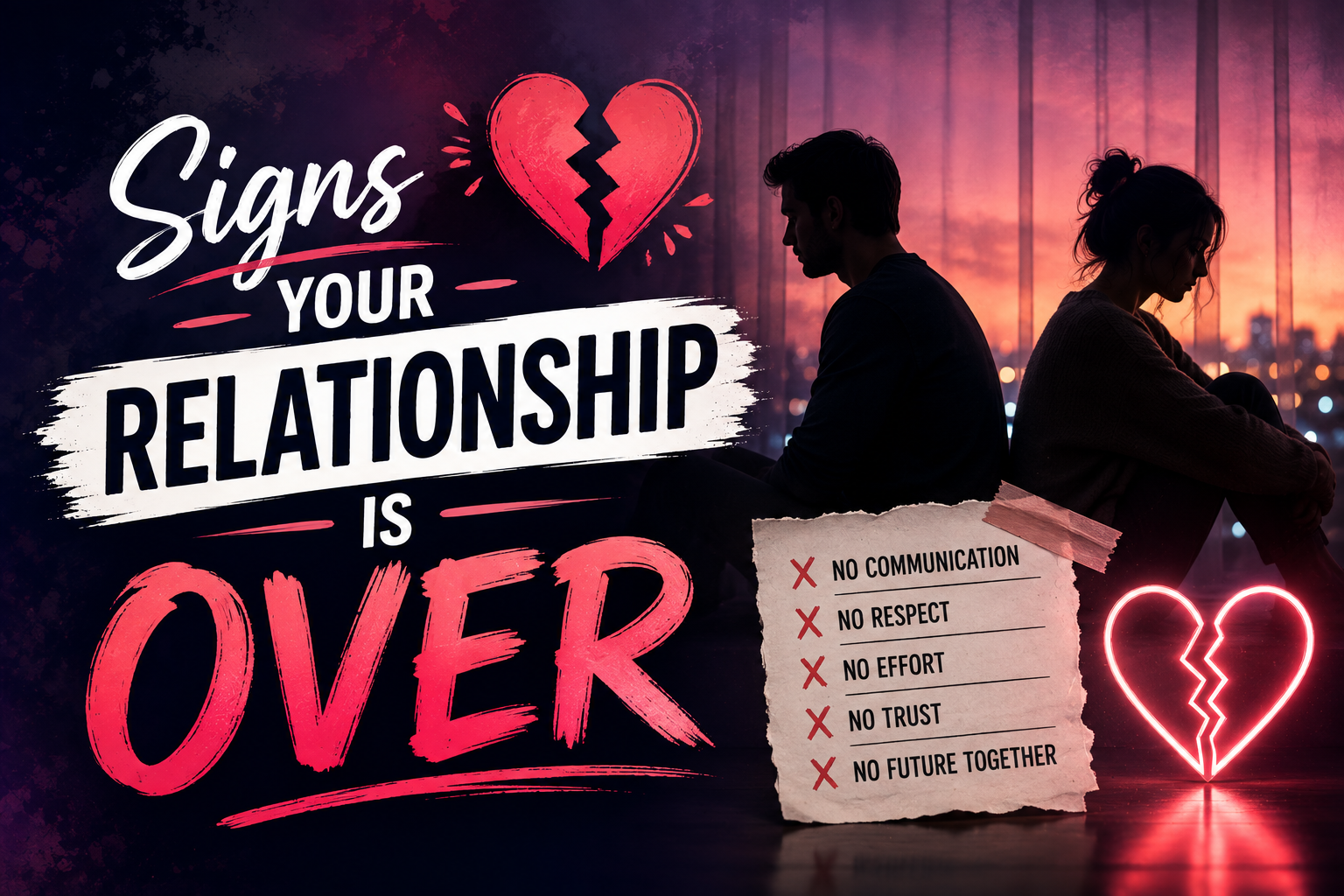
You are sitting next to your partner at dinner, but somehow you feel completely alone. You used to tell each other everything, even the small and silly things that happened during the day.
Now, you mostly talk about bills, work, food, family responsibilities, or who is going to do what tomorrow. You may still say goodnight, share a home, and look like a normal couple to everyone else.
But inside, something feels different. If you have quietly started asking yourself whether your relationship is over, do not ignore that question.
It does not automatically mean you should leave, but it may mean there is something important that needs your attention now.
A relationship does not usually end because of one bad day. More often, the distance grows slowly. Conversations become shorter. Affection becomes less natural. Arguments repeat without any real solution.
You stop sharing your feelings because you already expect disappointment. Eventually, you may find yourself wondering whether you are staying because you still want the relationship or because leaving feels too difficult.
The Most Important Signs Your Relationship Is Over
The clearest warning signs usually involve a change in how you feel around your partner. You may feel emotionally tired instead of supported.
You may feel more comfortable talking to friends than talking to the person you are dating or married to. You might also notice that you no longer care about solving the problems that once bothered you.
This does not mean every difficult relationship is finished. Stress, family problems, financial pressure, work and personal struggles can temporarily create distance. The real concern is a lasting pattern where connection, respect and the willingness to make things better continue to disappear.
You Feel Alone Even When Your Partner Is There
Feeling lonely in a relationship can be one of the most painful experiences because you are technically not alone. You have someone beside you, yet you do not feel emotionally understood.
You might come home after a difficult day and decide not to talk because you believe your partner will not listen. Perhaps you have exciting news but think about telling a friend first.
Maybe you sit together every evening without having a meaningful conversation. Occasional emotional distance is normal, especially during stressful periods.
But when loneliness becomes your normal experience and neither person seems interested in rebuilding closeness, it can be a serious sign that the relationship needs immediate attention.
You No Longer Want to Share Your Life With Them
Think about the person you naturally want to call when something important happens. If that person used to be your partner but is now someone else, ask yourself why.
Perhaps you no longer share your plans, worries, achievements or everyday experiences with your partner. You may have stopped asking about their day because you are no longer genuinely curious.
This change can happen slowly, so it may be difficult to notice at first. A relationship needs more than living together or having a shared history.
Emotional sharing creates connection. When you consistently stop wanting to share your life with someone, it is worth asking whether your emotional bond has changed.
You Have Stopped Trying to Solve the Same Problems
Every couple has disagreements. Healthy relationships are not free from arguments. What matters is whether both people are willing to understand the problem and make changes.
If you have discussed the same issue ten times and nothing changes, frustration can eventually turn into hopelessness. You might stop asking your partner to help because you already know what will happen.
Your partner may also stop raising concerns with you. At that point, the problem is no longer just the original disagreement.
The deeper problem is that neither person believes communication will lead to meaningful change. That loss of motivation can be an important sign of relationship breakdown.
Is It a Rough Patch or Is Your Relationship Really Ending
Before deciding that your relationship is over, look at the bigger picture. A difficult month does not necessarily mean the relationship has failed.
Couples can become distant during stressful periods involving money, work, parenting, family problems, grief or major life changes. During these times, affection and communication can decrease temporarily.
The important question is whether there is still a desire to reconnect. If both people can admit that something is wrong, listen to each other and make a genuine effort to improve things, there may still be a strong foundation.
You Feel Better When Your Partner Is Away
Notice your emotional state when your partner is not around. Do you miss them and look forward to seeing them, or do you feel an unusual sense of peace when they leave.
Perhaps your partner goes away for a weekend and you suddenly sleep better, enjoy your hobbies again and feel free to make your own choices.
Having personal space is healthy, so this feeling alone does not prove that a relationship is ending. The concern comes when relief consistently replaces affection.
If you repeatedly feel calmer, happier and more like yourself when your partner is absent, it may be time to understand what your relationship is doing to your emotional wellbeing.
You Stop Imagining a Future Together
People in relationships naturally imagine the future, even when they do not have a detailed plan. You might think about where you will live, what kind of home you want, future holidays, career decisions, marriage, children or simply growing older together.
If your partner no longer appears in those thoughts, pay attention. You may be planning your future as though you will eventually be alone.
Perhaps you think about moving somewhere new and your first thought is how good it would feel to make that decision without considering your partner.
This does not automatically mean you should leave, but repeated thoughts of a future without them can reveal emotional distance.
You No Longer Feel Excited to See Them
There is a difference between the natural comfort that develops in a long relationship and complete emotional indifference. You do not need to feel excited every time your partner walks through the door.
Long term relationships naturally become calmer and less intense. However, if you regularly feel disappointed when they come home, avoid spending time together or prefer almost any activity to being with them, something may have changed.
Think about an ordinary Friday evening. If you have free time together, do you naturally want to enjoy it as a couple, or do you immediately look for reasons to stay busy elsewhere. Your everyday reactions can reveal a lot.
When Love Is Still There but the Relationship Is Not Working
One of the most confusing relationship problems is knowing that you still love someone while also knowing that the relationship may no longer be healthy for you.
Love and compatibility are not exactly the same thing. Two people can care deeply about each other and still have different values, communication styles, future goals or emotional needs.
You may love your partner but feel constantly misunderstood. You may care about their wellbeing while knowing that staying together is making both of you unhappy.
This is why asking whether you still love someone is not always enough. A better question is whether the relationship allows both people to feel respected, safe, valued and emotionally connected.
You Have Lost Respect for Each Other
Respect is one of the foundations of a lasting relationship. Without it, even ordinary disagreements can become painful. You may notice constant criticism, mocking, insults, eye rolling or dismissive behavior.
Being annoyed with your partner sometimes is normal. Treating each other with contempt as a regular habit is different. If respect has disappeared, do not simply accept it as normal relationship behavior.
Physical Affection Has Almost Disappeared
Changes in physical intimacy can happen for many reasons, so this sign needs context. Stress, tiredness, parenting, personal difficulties and other life changes can affect sexual desire.
A temporary decrease in intimacy does not mean your relationship is ending. The warning sign is when physical affection disappears along with emotional closeness and neither person wants to address the change.
You may stop kissing, holding hands, cuddling or sitting close together. You may also feel uncomfortable discussing what has changed.
Ask yourself whether the lack of intimacy feels like a temporary phase or part of a much larger emotional separation. The answer can help you understand what is really happening.
What Happens When You Stop Caring About the Relationship
Sometimes the biggest sign that a relationship is ending is not anger. It is indifference. Anger still contains emotional energy. Indifference can mean you have become exhausted from trying.
You may no longer feel interested in arguing about the same problem because you have already accepted that nothing will change. You stop checking whether your partner is happy.
You stop asking for affection. You stop making plans together. From the outside, everything may appear calmer, but internally you may feel that the relationship has already ended.
If you recognize this feeling, do not rush into a decision. Instead, ask yourself whether you genuinely want to rebuild the relationship or whether you are emotionally preparing yourself to leave.
You Keep Thinking About Breaking Up
Most people have occasional thoughts about leaving during difficult moments. That alone is not unusual. What matters is how often the thought returns and what you feel when you imagine being single.
If you repeatedly picture yourself living alone, moving somewhere new, meeting other people or simply having peace in your daily life, there may be something deeper behind those thoughts.
You should also ask whether you want to leave because you are angry about a temporary problem or because you have felt unhappy for a long time.
Repeated thoughts about ending a relationship are worth exploring honestly rather than pushing them away simply because the decision feels uncomfortable.
You Feel Like You Cannot Be Yourself Anymore
A healthy relationship should give you room to be yourself. You should be able to have your own interests, friendships, opinions and personal space without constantly fearing your partner’s reaction.
If you have changed your personality to avoid conflict, stopped seeing friends because your partner dislikes them, or carefully choose every word because you are afraid of an argument, take that seriously.
You should not have to become smaller to keep a relationship together. If there is controlling behavior, intimidation, threats or abuse, the issue is more serious than ordinary relationship problems. Your safety and wellbeing should come before trying to save the relationship.
How to Know If Your Relationship Can Still Be Saved
If you are asking whether your relationship can be fixed, look at actions rather than promises. Saying that things will change is easy. Consistently behaving differently is much harder and much more meaningful.
Ask whether both of you can admit your part in the problems. Can you have a difficult conversation without immediately blaming each other. Can you apologize without making excuses.
Are you both willing to change habits that are hurting the relationship. Most importantly, does your partner genuinely want to work on the relationship, or are you the only person trying.
A relationship can survive difficult periods when both people are willing to take responsibility and make real changes.
Have One Honest Conversation Before Making a Final Decision
If you are seriously questioning the relationship, have a calm and direct conversation rather than silently collecting evidence against your partner. Choose a time when neither of you is rushing, angry or distracted.
Explain what you have been feeling and describe specific changes you have noticed. Instead of saying that you are always unhappy, explain what has been happening and how it affects you.
Then listen carefully to your partner’s response. You do not need to solve everything in one conversation. The goal is to understand whether there is still honesty, care and willingness on both sides.
If both people want to improve the relationship, professional couples counseling may also be worth considering.
What to Do If You Know the Relationship Is Over
Realizing that a relationship has ended can be painful even when you know it is the right decision. You may still love the person. You may miss the good memories.
You may worry about being alone or wonder whether you are making a mistake. Those feelings do not automatically mean you should stay. Ending a relationship is not proof that the relationship was meaningless.
Sometimes two people can have genuine love and still reach a point where staying together is no longer healthy or realistic. Give yourself time to think clearly.
Speak with someone you trust. If practical issues such as housing, money or children are involved, make a thoughtful plan rather than acting in the heat of emotion.
The Real Question Is What You Want From Your Relationship
There is no single sign that proves a relationship is over. Relationships are complicated, and people go through difficult periods. What matters is the pattern you are living with and the willingness of both people to change it.
If you feel lonely, disconnected, ignored or constantly unhappy, those feelings deserve attention. If respect has disappeared and neither person wants to rebuild it, that matters too.
On the other hand, if there is still affection, honesty, respect and a genuine desire to work together, a difficult period does not necessarily mean the end.
The most useful question may not be whether your relationship is already over. Ask yourself whether you would choose this relationship again if nothing changed.
Then ask whether both of you are genuinely willing to make the changes needed. Your honest answers can tell you much more than any list of relationship signs ever could.
About Today Guides
TodayGuides provides simple, practical, and easy-to-understand guides on relationships, dating, personal growth, and everyday life. Our content is designed to help readers solve real-life problems, make better decisions, and improve their daily lives with clear, actionable advice.
Feeling emotionally disconnected, constantly unhappy, and no longer wanting to spend time together are common signs. A lack of respect and willingness to fix recurring problems can also indicate that the relationship may be ending.
It may be time to leave when the relationship consistently makes you unhappy and honest efforts to improve things have failed. If there is no respect, trust, emotional connection or willingness to change, staying may no longer be healthy.
Sometimes feelings can return when both partners are willing to communicate and address the problems causing emotional distance. However, rebuilding a relationship requires genuine effort from both people, not just one partner.
A temporary change in intimacy does not necessarily mean a relationship is ending because stress and life changes can affect desire. It becomes more concerning when physical distance continues alongside emotional disconnection and neither partner wants to address it.
Start with an honest and calm conversation about what has changed and how you both feel about the relationship. If both partners want to continue, counseling and consistent effort may help, but you cannot rebuild a relationship alone.