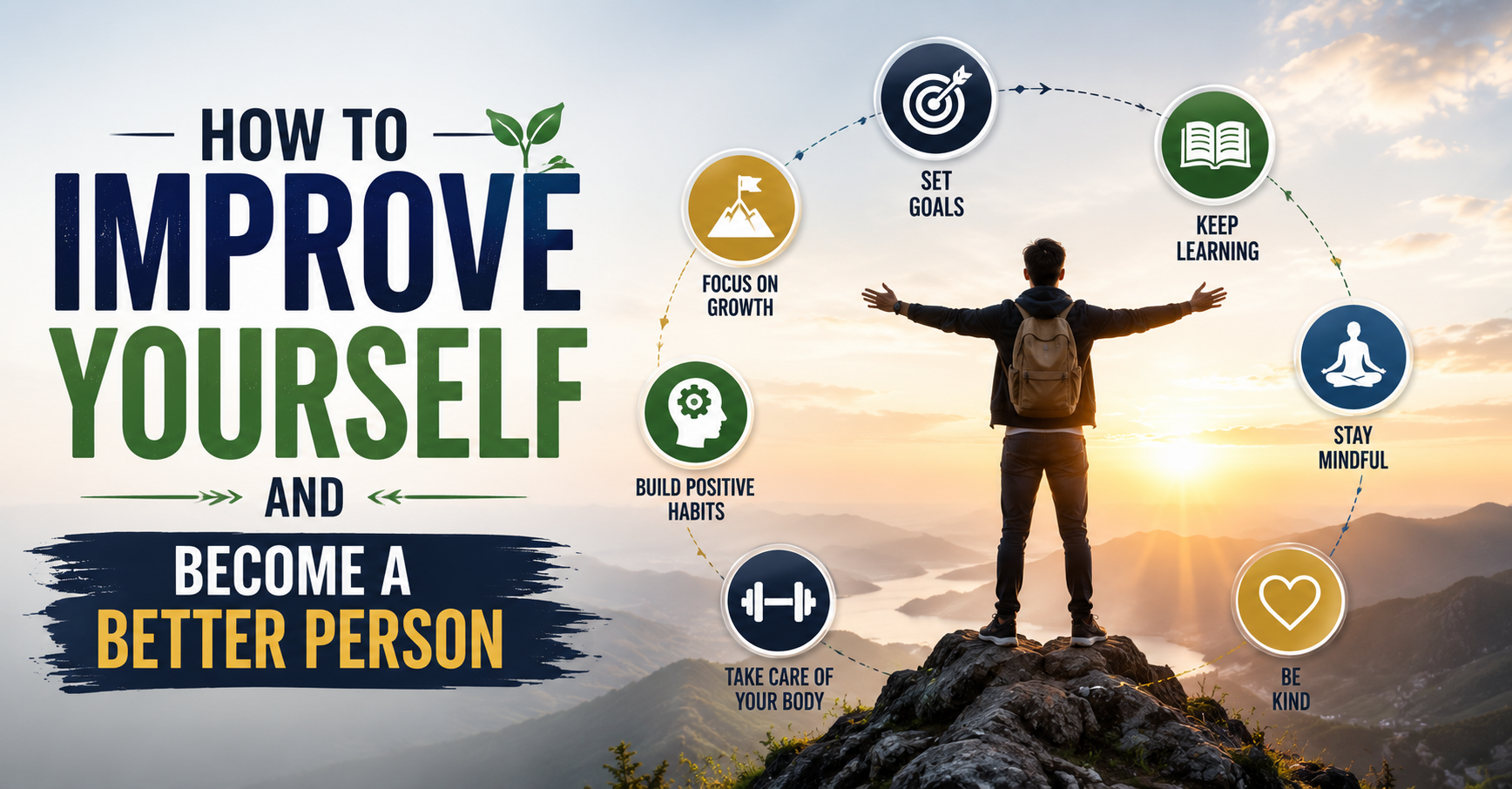
Have you ever looked at someone who seems confident, calm, and successful and wondered what they are doing differently. May be you have promised yourself many times that you will change your habits, become more disciplined, or finally start working on yourself.
Then daily responsibilities take over, your motivation fades, and everything goes back to the way it was before. This happens to people of every age. Life becomes busy, stress keeps increasing, and personal growth slowly moves to the bottom of the priority list.
The truth is that becoming a better person does not begin with a big decision or a perfect plan. It begins with small actions that you choose every single day. Those small choices slowly shape your personality, your confidence, your relationships, and your future.
If you are ready to improve yourself, this guide will help you understand what really works and how you can build lasting change without making your life feel complicated.
What Does It Really Mean to Improve Yourself
Many people think self improvement means earning more money, getting promoted, or becoming more successful than everyone else.
While these goals can certainly improve your quality of life, they are only one small part of personal development. Real growth begins from the inside.
It means becoming more responsible, learning from your mistakes, improving your communication, controlling your emotions, building better habits, and treating people with respect.
A better person is not someone who never fails. A better person is someone who continues learning after every mistake instead of making excuses.
Personal growth is about becoming a stronger version of yourself instead of trying to copy someone else’s life. When you focus on improving your character as well as your skills, success naturally follows in many different areas of life.
Why Personal Growth Is More Important Than Ever
The modern world constantly competes for your attention. Social media, endless notifications, entertainment, work pressure, and daily responsibilities leave very little time to think about yourself.
Many people spend hours comparing their lives with carefully edited pictures and videos online. Over time this creates self doubt, low confidence, and unnecessary pressure to keep up with others.
That is why learning how to improve yourself has become more important than ever before. Personal growth helps you build confidence based on your own progress instead of other people’s opinions.
It allows you to handle stress with greater maturity, make smarter decisions, improve your mental wellbeing, and develop healthier relationships. Instead of reacting to every challenge emotionally, you begin responding with patience and clarity. That simple shift changes the direction of your entire life.
The First Step Is Developing Honest Self Awareness
Every meaningful change starts with one simple habit that many people avoid. Honest self awareness. Before improving your personality, confidence, communication skills, or daily routine, you need to understand where you currently stand.
Ask yourself questions that may feel uncomfortable. Do you often blame others for your problems. Do you struggle to control your anger. You keep delaying important work even when you know it matters.
Have you listen carefully when people speak or do you only wait for your turn to talk. These answers are not meant to make you feel guilty. They are meant to show you the areas that deserve your attention.
Just as a doctor cannot recommend treatment without understanding the problem, you cannot create lasting self improvement without first understanding yourself honestly.
Accept Your Weaknesses Without Accepting Defeat
Many people either criticize themselves too much or refuse to admit any weakness at all. Neither approach leads to personal growth. Accepting your flaws does not mean giving yourself permission to stay the same forever.
It simply means recognizing that every person has strengths and weaknesses. Someone may be hardworking but struggle with patience. Another person may communicate well but lack discipline.
The important thing is to identify your own challenges without judging yourself harshly. Growth becomes possible when you replace self criticism with curiosity.
Instead of saying I always fail, ask yourself why the situation happened and what you can do differently next time. This mindset builds resilience and helps you improve without feeling discouraged every time life becomes difficult.
Build Good Habits That Slowly Change Your Life
Most people wait for motivation before taking action. They tell themselves they will start exercising next Monday, begin reading next month, or work on their goals after life becomes less busy. Unfortunately, that perfect time rarely arrives.
People who continue growing understand that habits are far more powerful than temporary motivation. A habit is a small action repeated so many times that it becomes part of your daily life without requiring much effort.
Reading ten pages every day may not seem impressive at first, but after one year you could finish several life changing books. Walking for twenty minutes each morning may feel like a small step, yet it improves your physical health, mental clarity, and energy.
Focus On Consistency Instead Of Perfection
One of the biggest reasons people stop working on themselves is because they expect perfect results too quickly. They miss one workout and decide the entire plan has failed.
They skip reading for two days and convince themselves they are not disciplined enough. Real personal development does not work that way. Every successful person has experienced days when things did not go according to plan.
The difference is that they returned to their routine instead of giving up completely. Imagine planting a tree. You do not dig it up every week to check whether it has grown.
You continue watering it because you trust the process. Self improvement follows the same principle. Small consistent actions performed over months create results that dramatic short term efforts can never match.
Develop Self Discipline Even When Motivation Disappears
Motivation feels exciting because it gives you energy in the beginning. However, motivation comes and goes depending on your mood, environment, and circumstances.
Self discipline is different because it allows you to continue even when you do not feel like doing the work. Think about a student preparing for an important examination. Some days the student feels motivated and studies for hours.
Other days the student feels tired but studies anyway because the goal is more important than temporary emotions. The same idea applies to every area of life.
Whether you want to improve your personality, build confidence, become healthier, or achieve career success, discipline keeps you moving when motivation disappears. Over time this ability becomes one of the strongest qualities you can develop.
Improve Your Mindset By Changing The Way You Think
Your mindset quietly influences every decision you make throughout the day. People with a negative mindset often see every challenge as proof that they cannot succeed. They avoid difficult situations because they fear failure or criticism.
On the other hand, people with a growth mindset understand that every challenge teaches something valuable. They believe skills can improve through learning, practice, and patience.
For example, someone who struggles with public speaking may feel nervous during the first few presentations. Instead of avoiding future opportunities, they continue practicing until confidence gradually replaces fear.
This change does not happen overnight, but every attempt makes the next one easier. When you begin seeing mistakes as lessons instead of personal failures, your confidence grows naturally because you stop fearing the learning process.
Learn Something New Every Single Day
One of the easiest ways to become a better person is to remain curious throughout your life. Learning should never stop after school or college. Every new skill expands your thinking and increases your ability to solve problems.
You do not need expensive courses or complicated programs to continue learning. Reading quality books, listening to educational conversations, improving communication skills, understanding financial planning, learning time management, or studying emotional intelligence all contribute to long term personal growth.
Imagine two people who started their careers on the same day. One spends years doing only the minimum required work while the other keeps learning new skills every month.
After several years the difference between them becomes clear. Continuous learning creates opportunities that talent alone often cannot provide.
Build Self Confidence Through Action Instead Of Waiting To Feel Ready
Many people believe confidence comes before action. In reality confidence usually comes after repeated action. Think about learning to ride a bicycle, driving a car, or speaking in front of a group.
Almost everyone feels uncertain during the beginning. Confidence develops because experience replaces fear with familiarity. The same principle applies to improving your life.
If you want better communication skills, start having more meaningful conversations. If you want leadership skills, volunteer to take responsibility. You want to improve your personality, practice kindness, patience, and honesty every day.
Every small success gives your brain evidence that you are capable of handling new challenges. Slowly your confidence becomes stronger because it is built on real experience rather than empty positive thinking.
Strengthen Your Emotional Intelligence To Handle Life Better
Many people believe intelligence alone determines success, but emotional intelligence often plays an even bigger role in everyday life. It is the ability to understand your own emotions while also recognizing how other people feel.
Someone with strong emotional intelligence does not react immediately when they become angry or frustrated. They take a moment to think before speaking because they understand that words spoken in anger can damage relationships for a long time.
Imagine receiving unfair criticism at work. Your first reaction may be to defend yourself or argue. A calmer response gives you time to understand the situation, communicate respectfully, and solve the problem without creating unnecessary conflict.
As you improve your emotional intelligence, you become more patient, more understanding, and much easier to work and live with.
Improve Your Communication Skills By Listening More
Most people think good communication means speaking confidently, but listening is often the most valuable skill. In many conversations, people are already preparing their next answer before the other person has finished talking.
This habit creates misunderstandings and weakens relationships. Becoming a better listener shows respect and helps you understand what someone is really trying to say.
Whether you are talking with family members, friends, coworkers, or customers, paying full attention builds trust over time. Ask thoughtful questions instead of making quick assumptions.
Make eye contact, avoid distractions, and allow people to complete their thoughts without interruption. Strong communication improves teamwork, reduces conflict, and helps you build deeper personal and professional relationships that last for years.
Build Healthy Relationships By Becoming Someone Others Can Trust
Every relationship is built on trust, honesty, and consistency. People naturally enjoy spending time with someone who keeps promises, respects boundaries, and treats others with kindness. Becoming a better person is not only about improving your own life.
It is also about becoming someone who adds value to the lives of others. Think about the people you admire most. They are probably dependable, respectful, and willing to help without expecting something in return.
You can develop the same qualities through everyday actions. Admit your mistakes when you are wrong, apologize sincerely when necessary, appreciate people for their efforts, and avoid gossip that damages trust.
These simple habits may seem small, but together they create relationships that remain strong even during difficult times.
Stop Comparing Yourself With Everyone Around You
Comparison has become one of the biggest obstacles to personal growth. Every day people scroll through social media and compare their careers, income, appearance, vacations, or achievements with others.
What they often forget is that they are comparing their real life with someone else’s carefully selected highlights. This creates unnecessary pressure and slowly reduces self confidence.
Instead of measuring your progress against another person, compare yourself with who you were six months or one year ago. Ask whether your habits have improved, whether your communication has become stronger, or whether you now handle stress more calmly than before.
Real growth happens when your attention stays focused on your own journey instead of constantly chasing someone else’s success.
Learn How To Handle Failure Without Losing Confidence
Failure is not the opposite of success. In many cases it is the path that leads to success. Every successful entrepreneur, athlete, teacher, artist, and professional has experienced disappointment at some point.
The difference is that they treated failure as feedback instead of accepting it as their identity. Imagine applying for a job and receiving a rejection.
Instead of believing you are not capable, you could improve your interview skills, strengthen your resume, and prepare better for the next opportunity. Each setback teaches something valuable if you remain willing to learn.
People who become stronger are not those who avoid failure completely. They are the ones who refuse to let failure stop them from trying again with greater knowledge and confidence.
Set Meaningful Goals That Match Your Values
Many people spend years chasing goals that were never truly their own. Society often tells us what success should look like, but personal happiness comes from living according to your own values.
Before setting goals, ask yourself what really matters to you. Some people value family, while others value creativity, learning, financial freedom, or helping their community.
When your goals reflect these values, staying motivated becomes much easier because your actions feel meaningful. Break large goals into smaller daily tasks that you can complete consistently.
Small achievements create momentum and make even the biggest dreams feel realistic over time. Clear goals combined with consistent action provide direction and reduce the feeling of being lost or overwhelmed.
Create A Daily Routine That Supports Long Term Growth
Your daily routine has a greater impact on your future than your occasional moments of motivation. Every morning you make small decisions that slowly shape your character.
Wake up on time, eat healthy meals, exercise regularly, read for a few minutes, or spend time learning a new skill may not seem life changing today. However, these actions create a powerful foundation over months and years.
A simple routine also reduces decision fatigue because you no longer waste energy wondering what to do next. Instead of chasing quick results, focus on building a lifestyle that supports continuous improvement.
When your daily habits align with your goals, success becomes a natural outcome rather than something you constantly struggle to achieve.
Common Mistakes That Slow Down Self Improvement
Many people work hard but still feel that they are making very little progress. In most cases the problem is not a lack of effort but following habits that quietly hold them back.
Trying to change everything at once often leads to burnout because the process becomes overwhelming. Depending only on motivation usually results in inconsistency because motivation naturally rises and falls.
Ignoring physical health also affects personal growth since poor sleep, unhealthy eating, and lack of exercise reduce focus and energy. Another common mistake is avoiding honest feedback because criticism feels uncomfortable.
People who continue improving understand that useful feedback helps them identify blind spots and become stronger. Avoiding these mistakes allows your efforts to produce better and more lasting results.
Remember That Becoming A Better Person Is A Lifelong Journey
There is no point where personal development is completely finished. Every stage of life brings new responsibilities, new challenges, and new lessons.
The qualities that help you succeed as a student may not be enough when you become a parent, a manager, or a business owner. That is why lifelong learning and continuous self reflection are so important.
Stay curious, remain humble, and always be willing to improve. Celebrate your progress without becoming satisfied with staying the same forever. Every experience, whether positive or difficult, has something valuable to teach if you remain open to learning.
People who continue growing throughout life often become wiser, calmer, and more confident because they never stop developing their character.
Final Thoughts
Learning how to improve yourself and become a better person is not about changing your entire life in a single day. It is about making better decisions one step at a time and repeating those decisions until they become part of who you are.
Every positive habit, every honest conversation, every lesson learned from failure, and every small act of kindness moves you closer to becoming the person you want to be. You do not need to be perfect to make meaningful progress.
What matters most is your willingness to keep moving forward even when the journey feels slow. Start with one small change today and stay consistent tomorrow.
Months from now you will look back and realize that the person you wanted to become was built through the simple choices you made every single day. If you continue learning, stay disciplined, and treat people with respect, you will not only improve your own life but also leave a positive impact on everyone around you.
About Today Guides
TodayGuides provides simple, practical, and easy-to-understand guides on relationships, dating, personal growth, and everyday life. Our content is designed to help readers solve real-life problems, make better decisions, and improve their daily lives with clear, actionable advice.
Improving yourself every day starts with small and consistent actions. You do not need to make huge changes overnight. Focus on one habit at a time, such as reading for fifteen minutes, exercising regularly, practicing gratitude, or learning a new skill.
The first step is becoming honest with yourself. Identify your strengths and weaknesses without judging yourself. Once you understand what needs improvement, set realistic goals and work on building positive habits. Being kind, responsible, and willing to learn from mistakes also plays an important role in becoming a better person.
Motivation naturally changes from day to day, so it should not be your only source of progress. Build simple daily routines that support your goals and focus on consistency instead of perfection. Remember why you started and celebrate small achievements along the way to maintain long term motivation.
Self improvement is a lifelong journey rather than a short term goal. Some positive changes can be noticed within a few weeks, while deeper changes in mindset, confidence, and personality may take months or even years.
Yes, people can improve many parts of their personality through consistent effort and self awareness. While some natural traits may remain the same, qualities such as patience, confidence, communication skills, emotional intelligence, and self discipline can all be developed through daily practice and positive experiences.
Some of the most effective habits include reading every day, exercising regularly, getting enough sleep, managing your time wisely, practicing gratitude, learning new skills, setting clear goals, and reflecting on your progress. These habits improve both your mental and physical wellbeing while supporting long term personal development.
Confidence grows through action and experience. Start by setting small goals and completing them consistently. Learn new skills, improve your communication, accept mistakes as learning opportunities, and stop comparing yourself with others.