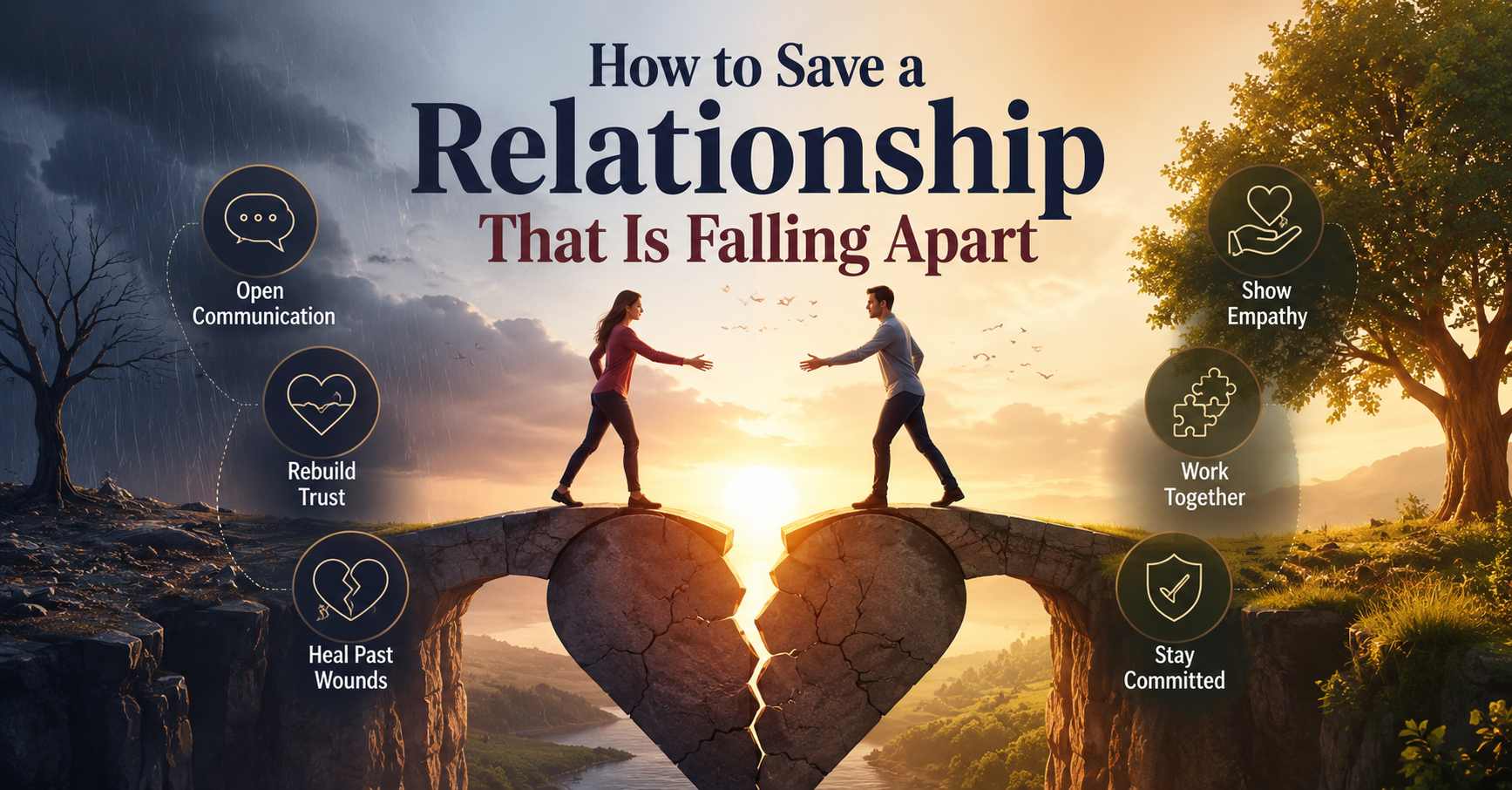
Have you ever sat in the same room with your partner and felt like you were miles apart. You still live together. You still talk when needed. But something feels different. The laughter is missing. Conversations feel forced. Small misunderstandings turn into big arguments.
Even simple moments become uncomfortable. This happens to more couples than people like to admit. Life becomes busy. Work pressure increases. Family responsibilities grow. Slowly, the relationship that once felt exciting starts feeling heavy.
The worst part is that many people notice the distance only after it has become a serious problem. The good news is that a relationship falling apart does not always mean it has reached the end.
When both partners understand the real issues and are willing to make meaningful changes, many relationships become stronger than they were before. This guide explains practical ways to rebuild love, trust, communication, and emotional connection using simple actions that actually work in real life.
Why Relationships Start Falling Apart Without People Realizing It
Many people believe relationships end because of one major mistake. In reality, most relationships slowly weaken through small everyday moments that seem harmless at first. A missed conversation today becomes emotional distance tomorrow.
A forgotten apology slowly turns into resentment. Constant work stress leaves very little time for meaningful connection. Financial worries create tension that enters every discussion. One partner may feel ignored while the other feels unappreciated.
Neither person plans for the relationship to become unhealthy, yet both unknowingly contribute to the growing gap. This is why many couples are surprised when they suddenly feel disconnected. The problem did not appear overnight.
It developed little by little through repeated habits that were never addressed. Understanding this truth is the first step toward saving a relationship because lasting solutions come from fixing the daily patterns rather than only focusing on the latest argument.
Common Signs Your Relationship Needs Immediate Attention
Every relationship goes through difficult phases, but some warning signs should never be ignored. If conversations mostly revolve around responsibilities instead of genuine interest in each other, emotional connection may already be fading.
Constant criticism, lack of appreciation, avoiding physical affection, spending more time on phones than talking together, or feeling relieved when your partner is not around are signs that deserve attention.
Many couples also notice that they stop sharing personal thoughts because they expect another disagreement instead of support. Some people begin looking for emotional comfort from friends or coworkers instead of their partner, which creates even more distance.
These signs do not automatically mean the relationship is over. They simply indicate that the relationship requires honest effort before the emotional gap becomes much harder to repair. Recognizing these warning signals early gives both partners a much better chance of rebuilding a healthy connection.
Emotional Distance Is Usually the Real Problem
People often believe they are fighting about money, household responsibilities, parenting, or busy schedules. Those issues certainly create stress, but they are rarely the deepest problem. The real challenge is usually emotional disconnection.
When people stop feeling emotionally safe with each other, every disagreement feels much bigger than it actually is. A simple question sounds like criticism. A delayed reply feels like rejection.
An honest suggestion is misunderstood as an attack. Emotional distance changes how couples interpret everyday situations. This is why solving practical problems alone rarely fixes a struggling relationship. Buying a new house, changing jobs, or taking a vacation may provide temporary relief,
but lasting improvement happens only when emotional intimacy is restored. Feeling understood, respected, appreciated, and emotionally secure creates the foundation that allows couples to handle life’s challenges together instead of fighting against each other.
How Honest Self Reflection Can Save Your Relationship
One of the hardest parts of repairing any relationship is accepting that personal growth matters just as much as pointing out your partner’s mistakes. When relationships become painful, people naturally notice everything the other person is doing wrong while overlooking their own habits.
This mindset creates endless blame instead of meaningful progress. Honest self reflection means asking uncomfortable questions. Do I truly listen without interrupting.
Do I become defensive too quickly. Have I stopped showing appreciation. Am I communicating my feelings clearly or expecting my partner to read my mind. These questions are not about accepting blame for every problem. They are about recognizing where positive change can begin.
Many relationships improve surprisingly fast when even one partner starts responding with greater patience, empathy, and emotional maturity because healthier behavior often encourages healthier responses from the other person.
Why Healthy Communication Matters More Than Winning Arguments
Many couples believe successful communication means proving their point. In reality, effective communication is about understanding before responding. During arguments, people often prepare their next sentence while their partner is still speaking.
This habit creates frustration because neither person feels heard. Healthy communication begins with listening carefully enough to understand the emotions behind the words. Instead of immediately defending yourself, try asking simple questions that encourage your partner to explain their feelings.
Repeat what you understood before sharing your own perspective. This small habit reduces misunderstandings and shows genuine respect. It is also important to speak about your own emotions instead of making accusations.
Saying that you feel lonely creates a completely different conversation than saying your partner never cares. Small changes in communication style often produce surprisingly powerful improvements because they reduce defensiveness and create space for honest conversations that strengthen trust instead of damaging it.
How to Rebuild Trust After It Has Been Damaged
Trust is one of the strongest foundations of a healthy relationship, yet it is also one of the easiest things to lose. Sometimes trust is broken by dishonesty. Sometimes it disappears because promises are repeatedly ignored.
In other situations, emotional neglect slowly weakens confidence until one partner begins questioning everything. Rebuilding trust does not happen through one emotional conversation or one sincere apology. It happens through consistent actions repeated over time.
If you say you will call, then call. If you promise to be honest, then stay honest even when the truth feels uncomfortable. Every small action either strengthens or weakens trust.
Many couples become frustrated because they expect forgiveness to happen quickly, but trust grows slowly through repeated positive experiences. Patience is essential because genuine trust is earned through reliable behavior rather than convincing words.
Practical Ways to Improve Communication Every Day
Healthy communication is not something couples practice only during serious discussions. It is built through everyday conversations that create emotional safety and understanding.
Many relationships improve simply because both partners begin paying attention to how they communicate instead of only focusing on what they communicate. Start by giving your full attention when your partner speaks.
Put the phone away, maintain eye contact, and avoid interrupting before they finish explaining their thoughts.Ask questions instead of making assumptions. Share your feelings honestly without expecting your partner to guess what is bothering you.
Even spending fifteen uninterrupted minutes talking about each other instead of daily responsibilities can rebuild emotional closeness. These small habits may seem ordinary, but they gradually create stronger communication that helps couples solve bigger problems more calmly and respectfully.
Learn the Difference Between Reacting and Responding
One reason many relationships struggle is that people react emotionally instead of responding thoughtfully. A reaction usually happens within seconds and is driven by anger, disappointment, fear, or frustration.
A thoughtful response takes a little more time because it considers both the situation and the other person’s feelings. Imagine your partner forgets something important. An immediate reaction may involve criticism or shouting.
A thoughtful response begins by understanding what happened before making assumptions. This simple change often prevents unnecessary arguments from becoming much larger conflicts.
Couples who learn to pause before speaking usually experience fewer hurtful conversations because they choose words that solve problems instead of creating new ones.
Emotional control is not about hiding feelings. It is about expressing those feelings in a way that protects the relationship rather than damaging it.
Small Daily Habits That Make Relationships Stronger
People often believe saving a relationship requires dramatic romantic gestures, expensive gifts, or unforgettable surprises. While those moments can be meaningful, lasting relationships are usually built through small daily habits that create consistency and emotional security.
Saying thank you after ordinary acts of kindness shows appreciation. Greeting each other warmly after work reminds both partners that they matter.
Sharing meals without distractions creates opportunities for genuine conversation. Holding hands during a walk or checking on each other during a busy day strengthens emotional connection in simple but powerful ways.
These habits may appear small on their own, yet together they create an environment where both people feel valued, respected, and emotionally connected. Strong relationships are rarely built by occasional grand moments. They are built through repeated everyday choices.
How to Stop Having the Same Arguments Again and Again
Many couples become trapped in repeating the same disagreements for months or even years. The topic may change, but the emotional pattern remains exactly the same. One person criticizes. The other becomes defensive.
Both stop listening. Eventually the discussion ends without solving anything. The same issue returns later with even greater frustration. Breaking this cycle begins with recognizing the pattern instead of focusing only on the subject being discussed.
When you notice emotions becoming intense, pause the conversation before it becomes destructive. Agree to return after both people have had time to calm down. Stay focused on one issue instead of bringing up every mistake from the past.
The goal is not to win the argument. The goal is to understand each other well enough to find a solution that respects both partners and prevents the same conflict from repeating.
Why Quality Time Is More Important Than Quantity
Many couples worry because they cannot spend several hours together every day. The truth is that meaningful connection depends more on quality than quantity.
Even people with demanding careers and busy family responsibilities can strengthen their relationship by protecting small moments of genuine attention. Twenty minutes of focused conversation without phones can be more valuable than an entire evening spent sitting together while looking at separate screens.
Cooking dinner together, taking a short evening walk, enjoying morning coffee, or talking before bedtime helps rebuild emotional closeness without requiring major lifestyle changes.
These shared experiences remind both partners that their relationship still deserves attention despite life’s responsibilities. Consistent quality time creates emotional security that helps couples stay connected during stressful periods.
How to Deal With Relationship Stress Caused by Outside Problems
Not every relationship problem begins inside the relationship itself. Financial challenges, career uncertainty, health concerns, parenting responsibilities, and family conflicts often create emotional pressure that affects communication at home.
Many couples unknowingly direct their frustration toward each other even though neither partner is the real cause of the stress. A healthier approach is to treat outside problems as shared challenges instead of personal attacks.
Instead of asking who is responsible, ask how both of you can solve the situation together. This shift in thinking transforms conflict into teamwork.
When couples support each other during difficult times, they often develop greater trust and emotional closeness than they had before the challenge began. Facing problems together strengthens the relationship because both partners begin feeling understood instead of isolated.
When Professional Relationship Counseling Can Help
Many people believe relationship counseling should be considered only when separation seems unavoidable. In reality, professional support is often most effective when couples seek help before resentment becomes deeply rooted.
A qualified relationship therapist provides a safe environment where both partners can speak openly without constant interruption or emotional escalation.
Counseling can help improve communication, rebuild trust, understand emotional needs, resolve long standing disagreements, and develop healthier conflict resolution skills. It also allows couples to identify unhealthy relationship patterns that they may not recognize on their own.
Seeking professional guidance does not mean the relationship has failed. It often shows maturity and commitment because both people are choosing to invest in a healthier future instead of allowing the same problems to continue growing.
When It Is Time to Forgive and Move Forward
Forgiveness is one of the most misunderstood parts of repairing a relationship. Many people believe forgiving means pretending nothing happened or accepting hurtful behavior without consequences. That is not true.
Real forgiveness means making a conscious decision to stop carrying anger after the issue has been acknowledged, responsibility has been accepted, and genuine effort has been made to change. This process takes time and cannot be forced.
Some wounds heal within weeks while others require months of consistent actions before emotional safety returns. If one partner continues bringing up the same mistake after honest progress has been made, healing becomes difficult for both people.
Forgiveness does not erase the past. It creates room for a healthier future where both partners focus more on growth than on repeated punishment. Strong relationships are built when people learn from painful experiences instead of allowing those experiences to control every future conversation.
How to Make Your Partner Feel Loved Again
Love is not only about saying the right words. It is about making another person feel emotionally important through everyday actions. Many people assume their partner already knows they are loved, but relationships often become stronger when affection is expressed regularly instead of being taken for granted.
Listen carefully when your partner shares something important. Celebrate their achievements, even the small ones. Offer encouragement during stressful days. Give sincere compliments without expecting anything in return.
Physical affection such as holding hands or offering a warm hug can also strengthen emotional connection when both partners are comfortable with it.
These simple actions communicate care more effectively than expensive gifts or occasional grand surprises. Feeling valued on ordinary days creates emotional security that helps relationships remain strong even during difficult times.
Mistakes That Can Push a Relationship Further Apart
When couples try to repair a struggling relationship, they sometimes make choices that unintentionally increase emotional distance. Constantly checking your partner’s phone, bringing up old arguments during every disagreement, expecting immediate change, comparing your relationship with others,
or involving too many friends and relatives in private conflicts can create new problems instead of solving existing ones. Another common mistake is assuming that silence means peace. Avoiding important conversations may reduce tension for a short time,
but unresolved emotions usually return with greater intensity later. Healthy relationships improve through honest discussions, mutual respect, and consistent effort rather than control or avoidance.
Recognizing these mistakes early allows both partners to replace unhealthy habits with healthier ways of communicating and supporting each other.
Saving a relationship that is falling apart is rarely about finding one perfect solution. It is about making small but meaningful changes every single day. Honest communication, mutual respect, emotional support, trust, forgiveness, and quality time all play an important role in rebuilding a healthy connection.
Every relationship faces challenges because life constantly changes, but those challenges do not have to become the end of the journey. Couples who choose understanding over blame and teamwork over conflict often discover that difficult times can strengthen their relationship instead of destroying it.
If you and your partner are both willing to grow together, listen with empathy, and stay committed even when progress feels slow, your relationship has a much better chance of recovering.
Real change does not happen overnight, but consistent effort creates lasting results. The strongest relationships are not those that never face problems. They are the ones where both people continue choosing each other, even during life’s most difficult moments.
About Today Guides
TodayGuides provides simple, practical, and easy-to-understand guides on relationships, dating, personal growth, and everyday life. Our content is designed to help readers solve real-life problems, make better decisions, and improve their daily lives with clear, actionable advice.
Yes. Many relationships can be saved when both partners communicate honestly, rebuild trust, and make consistent efforts to solve problems together.
There is no fixed timeline. Some couples see improvement in a few weeks, while others may need several months depending on the situation and commitment.
Yes. Trust can be rebuilt through honesty, consistency, keeping promises, and patient effort over time.
No. Frequent arguments usually point to communication issues or unmet emotional needs. If both partners work on resolving conflicts, the relationship can improve.
Couples should consider counseling when they struggle to communicate, face repeated unresolved conflicts, or find it difficult to rebuild trust on their own.