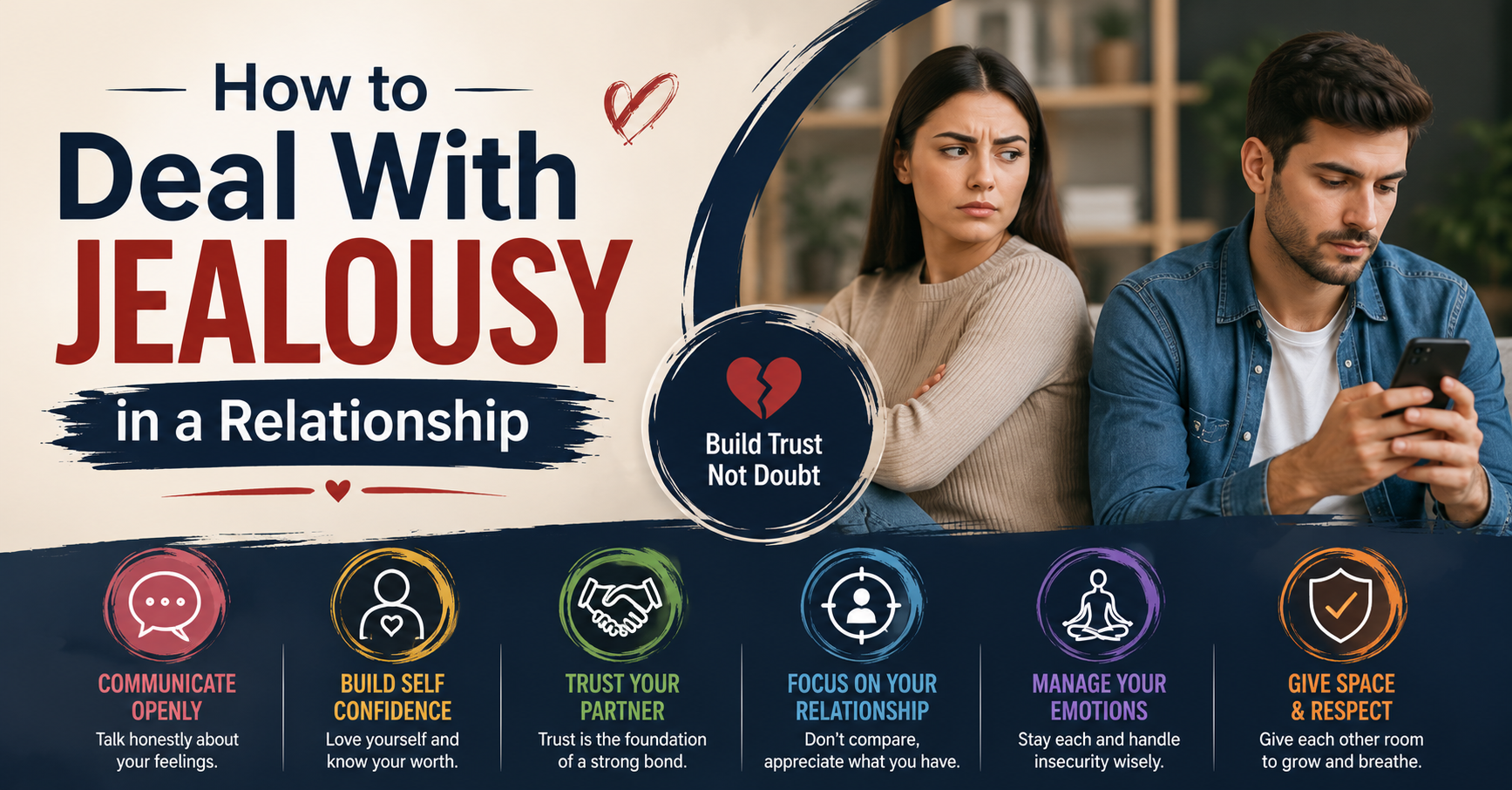
You are sitting with your partner, enjoying a quiet evening, when their phone lights up with a message. They smile for a second before putting it away. Nothing unusual has happened, but suddenly your mind starts asking questions.
Who was that. Why did they smile. Why did they not tell me. Within a few minutes, your mood changes even though you have no proof that anything is wrong. This is how jealousy often begins. It does not always arrive because someone has done something hurtful.
Sometimes it grows from fear, past experiences, or simple misunderstandings. Many people feel embarrassed to admit they get jealous, but it is one of the most common emotions in romantic relationships. The important question is not whether you feel jealous.
The real question is how you handle it. When jealousy is ignored, it slowly weakens trust and creates unnecessary arguments. When it is understood and managed in a healthy way, it can actually help couples build better communication and stronger emotional connection.
This guide will help you understand why jealousy happens, what it really means, and how you can deal with it in a practical and healthy way without damaging your relationship.
Jealousy in a Relationship
Jealousy in a relationship is much more than feeling uncomfortable when your partner talks to someone else. It is a complex emotional response that usually comes from the fear of losing someone you deeply care about.
It can appear because of insecurity, lack of trust, painful past experiences, low self confidence, or even unrealistic expectations. In many cases, the problem is not what your partner is doing. The problem is the meaning your mind gives to their actions.
For example, if your partner replies late because they are busy at work, one person may simply wait for their response, while another may immediately think they are being ignored or replaced. The situation is the same, but the emotional reaction is completely different.
That is why understanding jealousy is the first step toward controlling it instead of letting it control your relationship. Healthy couples recognize that emotions are normal, but they also know that emotions should never become the only evidence for making decisions.
Why Jealousy Happens Even in Happy Relationships
Many people believe jealousy only exists in unhealthy relationships, but that is not true. Even couples who love each other deeply can experience moments of jealousy. The reason is simple. Every person carries emotional experiences from different stages of life.
Someone who was betrayed in a previous relationship may become anxious much faster than someone who has always experienced trust and stability. Likewise, people with low self esteem often compare themselves with others and worry that they are not good enough for their partner.
Modern technology has also made jealousy more common than ever before. Social media creates endless opportunities to compare relationships, appearances, careers, and lifestyles. A simple photo, a friendly comment, or a new follower can trigger unnecessary doubts.
Instead of focusing on what is actually happening inside the relationship, people begin reacting to assumptions created by online activity. Understanding these hidden reasons helps couples stop blaming each other and start solving the real issue together.
Common Causes of Jealousy That Most People Overlook
Jealousy rarely appears without a reason, but the reason is not always obvious. Sometimes it grows because communication has become weaker over time. Sometimes emotional needs are not being expressed openly, leaving one partner feeling ignored or unimportant.
In other situations, childhood experiences, family relationships, or repeated rejection can quietly shape the way a person reacts in adulthood. Fear of abandonment is another powerful trigger that often stays hidden beneath the surface.
Some people become jealous because they constantly compare themselves with others in terms of appearance, success, or personality. Others struggle because they depend completely on their relationship for happiness and emotional security.
When their partner spends time with friends, coworkers, or family members, they immediately feel left behind. These deeper causes are often overlooked because people focus only on the latest argument instead of understanding the emotional pattern that has been developing for years.
Healthy Jealousy Versus Unhealthy Jealousy
Not every feeling of jealousy is harmful. In fact, small moments of jealousy can remind us that we value someone and care about the relationship. The difference lies in how those feelings are managed. Healthy jealousy encourages honest conversations, self reflection, and mutual understanding.
It helps couples discuss their concerns before they become larger problems. Unhealthy jealousy, on the other hand, turns fear into controlling behavior. It often leads to checking phones without permission, demanding constant updates, questioning every interaction, or making accusations without evidence.
These actions slowly damage trust because they replace respect with suspicion. Imagine two different partners facing the same situation. One calmly asks questions and listens to the explanation. The other immediately assumes betrayal and starts an argument.
The event is identical, but the outcome is completely different because of how jealousy is handled. Learning this difference can protect a relationship from unnecessary conflict while creating an environment where both partners feel respected, trusted, and emotionally safe.
Early Signs That Jealousy Is Becoming a Serious Problem
Most relationships do not suddenly become unhealthy overnight. The warning signs usually appear gradually and become stronger over time. You may notice yourself constantly thinking about where your partner is, who they are talking to, or why they have not replied yet.
Small delays begin to feel like rejection, and harmless situations start creating emotional stress. You may find yourself comparing your relationship with couples you see online or worrying about people who are simply friends or coworkers.
Instead of enjoying time together, your attention shifts toward finding proof that something is wrong. These patterns slowly increase anxiety and reduce emotional closeness. Over time, your partner may begin feeling like they are always being questioned instead of being trusted.
Recognizing these early signs allows you to take action before jealousy becomes a habit that damages communication, weakens intimacy, and creates unnecessary distance between two people who genuinely care about each other.
How to Deal With Jealousy in a Relationship Without Hurting Your Bond
Feeling jealous does not mean you are a bad partner. It also does not mean your relationship is falling apart. What matters is how you respond to those emotions. Many people react immediately because jealousy feels urgent.
They send emotional messages, ask repeated questions, or make accusations before understanding what actually happened. These reactions often create problems that did not exist in the first place. A better approach is to slow your response and understand what triggered your feelings.
Ask yourself whether you are reacting to facts or assumptions. Did your partner actually break your trust, or is your mind filling in missing details with negative stories. Learning to pause before reacting gives you time to think clearly instead of emotionally.
This simple habit can prevent unnecessary arguments and help both partners communicate with honesty rather than frustration. Over time, handling jealousy calmly creates a stronger relationship built on trust instead of fear.
Learn to Separate Facts From Assumptions
One of the biggest reasons jealousy grows so quickly is because the human brain naturally tries to complete missing information. When you do not know the full story, your mind often creates one on its own, and that story is usually negative.
Imagine your partner says they will be home at seven but arrives an hour later without replying to your messages. The fact is that they came home late. The assumption is believing they were lying or spending time with someone else.
There could be many simple explanations such as traffic, an unexpected meeting, or a dead phone battery. Before reacting, write down what you actually know and compare it with what you are imagining. This small exercise helps reduce emotional thinking and encourages logical decision making.
People who practice separating facts from assumptions usually experience less anxiety and develop healthier communication habits because they stop treating every fear as reality.
Build Self Confidence Instead of Seeking Constant Reassurance
Many people think jealousy disappears when their partner gives more attention or reassurance. While support from your partner is important, lasting confidence comes from within.
If your happiness depends completely on another person, every small change in their behavior may feel threatening. Building self confidence means recognizing your own value outside the relationship.
Spend time improving your physical health, learning new skills, pursuing hobbies, and maintaining friendships with people who support you. Celebrate your achievements instead of constantly comparing yourself with others.
The more confident you become as an individual, the less likely you are to believe that someone else can easily replace you. Confidence creates emotional stability because it reminds you that your worth is not determined by another person’s actions.
Strong relationships are usually built by two emotionally healthy individuals who choose each other every day rather than depending on each other for their entire sense of identity.
Your Feelings Without Blaming Your Partner
Healthy communication is one of the most effective ways to deal with jealousy in a relationship. Unfortunately, many conversations begin with blame instead of honesty.
Statements like you always ignore me or you must be hiding something immediately make the other person defensive. Instead, focus on explaining how you feel without accusing your partner of bad intentions.
You can say that you felt insecure when plans changed suddenly because you did not know what was happening. This approach opens the door for understanding rather than conflict.
It also allows your partner to explain their perspective without feeling attacked. Good communication is not about winning an argument. It is about understanding each other better.
Couples who discuss difficult emotions respectfully often discover that the real problem is a misunderstanding rather than dishonesty. Honest conversations strengthen trust because both people feel safe expressing their emotions without fear of judgment or unnecessary criticism.
Healthy Boundaries That Protect Trust
Every successful relationship has boundaries, even if they are never written down. Boundaries are not about controlling another person. They are about creating clear expectations that help both partners feel respected and emotionally secure.
For example, one couple may agree to keep each other informed about major plans, while another may value more personal independence. Some partners are comfortable sharing social media passwords, while others believe privacy is an important part of trust.
Neither approach is automatically right or wrong. What matters is that both people understand and respect the same expectations. These conversations should happen before problems appear instead of during arguments.
Healthy boundaries reduce confusion because both partners know what behavior is acceptable and what might cause discomfort. When expectations are clear, jealousy has fewer opportunities to grow through misunderstandings, assumptions, or unrealistic beliefs about how a relationship should work.
How to Rebuild Trust After Jealousy Has Damaged the Relationship
Trust is one of the hardest things to rebuild once jealousy has created repeated arguments and emotional distance. The good news is that trust is not restored through one apology or one serious conversation. It grows through small actions that are repeated every day.
If you have accused your partner unfairly in the past, accept responsibility instead of making excuses. At the same time, if your partner has made mistakes that created insecurity, they should also be willing to acknowledge their part.
A healthy relationship is never about one person carrying all the responsibility. It is about both people working toward the same goal. Keeping promises, being honest about plans, showing consistency, and following through on commitments slowly rebuild emotional safety.
Trust is built when actions match words over a long period. Couples who focus on steady progress instead of expecting instant change usually develop a stronger and more secure relationship than they had before.
Practical Ways to Strengthen Emotional Security Every Day
Many people wait until there is a problem before putting effort into their relationship. In reality, emotional security is created through small daily habits rather than big romantic moments. Spend quality time together without distractions.
Listen carefully when your partner talks instead of checking your phone. Appreciate the small things they do instead of only noticing mistakes. Express affection in ways that feel natural, whether through kind words, thoughtful gestures, or spending meaningful time together.
Encourage each other’s personal goals instead of becoming threatened by them. A relationship becomes stronger when both people feel supported as individuals as well as partners.
These simple habits create an environment where trust naturally grows and jealousy loses its power. When people consistently feel valued, respected, and emotionally connected, they are much less likely to fear losing the relationship or compare themselves with others.
Common Mistakes That Make Jealousy Worse
People often believe they are protecting their relationship when they act on jealous feelings, but many common reactions actually make the situation worse. Constantly checking your partner’s phone, asking the same questions repeatedly, or monitoring their social media activity usually increases anxiety instead of providing peace of mind.
Even if you find nothing suspicious, your mind often searches for another reason to worry. Another mistake is comparing your relationship with couples you see online. Social media usually shows carefully selected moments rather than everyday reality.
Judging your relationship against those images creates unrealistic expectations that no real couple can maintain. Some people also try to make their partner jealous to test their love or gain attention.
This strategy almost always damages trust because it creates confusion and emotional insecurity. Healthy relationships grow through honesty, respect, and open communication, not through emotional games or attempts to create fear.
Stop Comparing Your Relationship With Everyone Else
Comparison is one of the fastest ways to create unnecessary jealousy. Every relationship has its own strengths, challenges, and pace of growth. Looking at friends, coworkers, celebrities, or social media influencers and believing their relationships are perfect can make you feel dissatisfied with your own.
The truth is that you only see a small part of their lives. You do not see the disagreements, disappointments, or personal struggles happening behind the scenes. Instead of asking why your relationship does not look like someone else’s, focus on whether your own relationship is becoming healthier than it was yesterday.
Celebrate progress instead of chasing perfection. Couples who stop comparing themselves with others usually experience greater emotional satisfaction because they begin appreciating what they have instead of constantly worrying about what they think they are missing.
When Jealousy Is a Warning Sign Instead of Just an Emotion
Not every feeling of jealousy comes from insecurity or overthinking. Sometimes it appears because something in the relationship genuinely needs attention.
If your partner repeatedly lies, hides important information, breaks promises, or refuses to communicate honestly, your concerns may have a real foundation. In these situations, the goal is not to ignore your feelings but to understand what they are trying to tell you.
Healthy relationships are built on honesty, respect, and consistency. When these qualities are missing for a long time, trust naturally becomes weaker. The key is to look for patterns instead of reacting to one isolated event. Everyone makes mistakes, but repeated behavior tells a much clearer story.
Instead of making decisions based only on emotions, pay attention to facts, actions, and whether your partner is willing to rebuild trust through consistent effort. This balanced approach helps you protect both your emotional wellbeing and your relationship.
When It Is Time to Ask for Professional Help
Some couples try everything they know, yet the same arguments keep happening again and again. Jealousy becomes a cycle where one partner constantly feels anxious while the other feels exhausted from defending themselves.
If this pattern continues for months and begins affecting daily life, seeking professional support can be a positive step rather than a sign of failure.
A qualified relationship counselor can help both partners understand the deeper causes behind jealousy, improve communication, and develop healthier ways to respond during emotional situations.
Therapy also helps identify personal issues such as anxiety, low self confidence, attachment patterns, or unresolved trauma that may be influencing the relationship.
Many strong couples attend counseling not because they want to end the relationship but because they want to protect it. Asking for guidance shows commitment to growth and creates an opportunity to solve problems before they become too difficult to manage.
Final Thoughts
Jealousy is one of the most misunderstood emotions in a relationship. Many people believe it is proof of love, while others see it as a sign that the relationship is already failing.
In reality, it is neither. Jealousy is simply an emotional signal that deserves attention and understanding. Sometimes it points toward personal insecurities that need healing. Other times it highlights communication problems or trust issues that both partners should address together.
The important thing is to respond with patience rather than panic. Strong relationships are not built because two people never experience difficult emotions. They become stronger because both partners choose honesty, respect, empathy, and consistent effort even during challenging moments.
If you learn to understand your feelings instead of allowing them to control your actions, jealousy will slowly lose its power, and your relationship will gain something far more valuable, lasting trust and genuine emotional security.
About Today Guides
TodayGuides provides simple, practical, and easy-to-understand guides on relationships, dating, personal growth, and everyday life. Our content is designed to help readers solve real-life problems, make better decisions, and improve their daily lives with clear, actionable advice.
Yes. Feeling jealous from time to time is completely normal because every person wants to feel valued and emotionally secure. The problem is not the emotion itself but how you respond to it. Healthy jealousy leads to honest conversations and self reflection, while unhealthy jealousy leads to controlling behavior, repeated accusations, and broken trust. Understanding this difference helps couples manage emotions in a constructive way instead of allowing them to damage the relationship.
It can, but only when both partners deal with it in a healthy way. Honest discussions about fears, expectations, and emotional needs often help couples understand each other better. These conversations build trust because both people feel heard and respected. If jealousy encourages better communication instead of controlling behavior, it can become an opportunity for emotional growth rather than a source of conflict.
Overthinking usually becomes stronger when there is uncertainty or a lack of confidence. Focus on the facts instead of imagined situations. Keep yourself engaged with your own goals, hobbies, career, and friendships instead of making your relationship the center of every thought. If anxious thoughts continue to appear, pause before reacting and ask yourself whether there is real evidence supporting your fears. This simple habit gradually reduces unnecessary worry and helps you respond more calmly.
Yes. Social media often shows carefully selected moments that do not represent real life. Seeing your partner interact with other people online or comparing your relationship with perfect looking couples can create unnecessary insecurity. Limiting comparison and remembering that online content rarely shows the complete picture helps reduce these feelings. Strong relationships are built through real conversations and shared experiences, not through what appears on a screen.